
BRAND AUTOPSY · 03
Jacquemus: When the Brand Is the Founder's Feeling
Léa Mondoloni · April 2026 · 5 min read ↓
THE OBSERVATION
There are brands that have a point of view. And there are brands that are a feeling. Jacquemus is, distinctively and almost entirely, a feeling — specifically, the feeling of Simon Porte Jacquemus himself: his warmth, his nostalgia, his Provençal light, his pleasure in making things beautiful and sharing that pleasure directly, without the mediation that most luxury houses interpose between founder and audience.
In a market where luxury is almost universally filtered through a layer of institutional distance — where the brand speaks from a position of controlled authority rather than personal enthusiasm — Jacquemus communicates like a person rather than an institution. The campaigns look like memories rather than constructions. The aesthetic is warm in a category that prizes cool. The scale feels intimate despite the numbers.
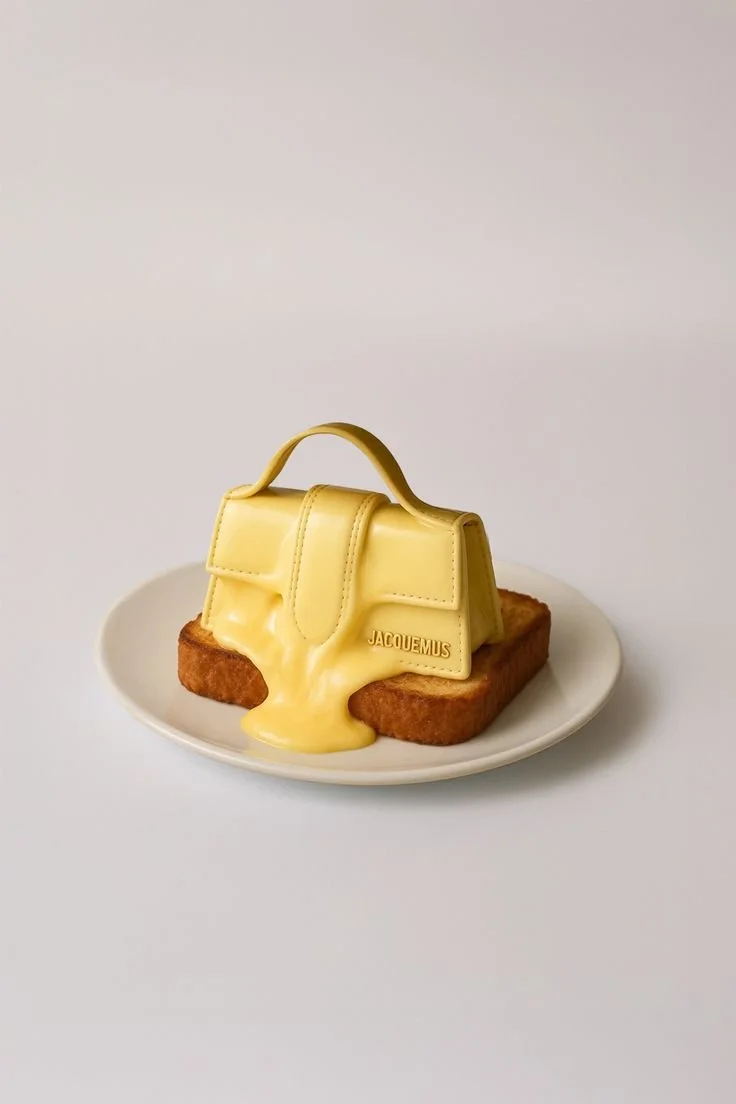
The brand's growth has been exceptional precisely because this feeling is genuinely felt. You cannot fake the specific quality of warmth that Jacquemus communicates. The lavender fields. The oversized hats. The miniature bags. The shows staged in salt flats and swimming pools. All of it is, unmistakably, Simon. Which raises the question that success has, so far, made unnecessary to ask: what is Jacquemus without Simon?
THE DIAGNOSIS
Autobiographical brands are among the most powerful and the most structurally vulnerable in luxury. Their power comes from authenticity in the most literal sense. Their vulnerability is identical to their power: they depend, entirely, on the continued alignment between the person and the project.
The great luxury houses were almost all founded by individuals whose personal vision was the brand. What distinguished the ones that survived into institutional luxury is that they developed, over time, a set of codes and convictions that could outlast the founder — a brand logic separable from the person who originated it. Jacquemus has not yet completed this transition. The brand's visual language is identifiable, but it is identifiable as Simon's sensibility, not as a set of principles that could survive a change in that sensibility.
If Simon Porte Jacquemus were to experience the creative evolution that all artists eventually undergo — the deepening, the complication, the movement toward something more complex — the brand would move with him, because the brand and the person are not yet distinguishable.
THE IMPLICATION
The most important work Jacquemus can do in the next five years is not another extraordinary show or viral campaign moment. It is the quieter, harder work of asking: what does this brand believe when I am not in the room? If the answer is clear, the brand will outlast the moment. If the answer is still "whatever Simon feels," the brand and the person remain the same thing which is wonderful, and fragile, and exactly as durable as one person's feeling.
“The most valuable thing Jacquemus has built is also the thing it has never stress-tested: what the brand believes when Simon is not in the room.”
— Léa Mondoloni, Paris · 2026