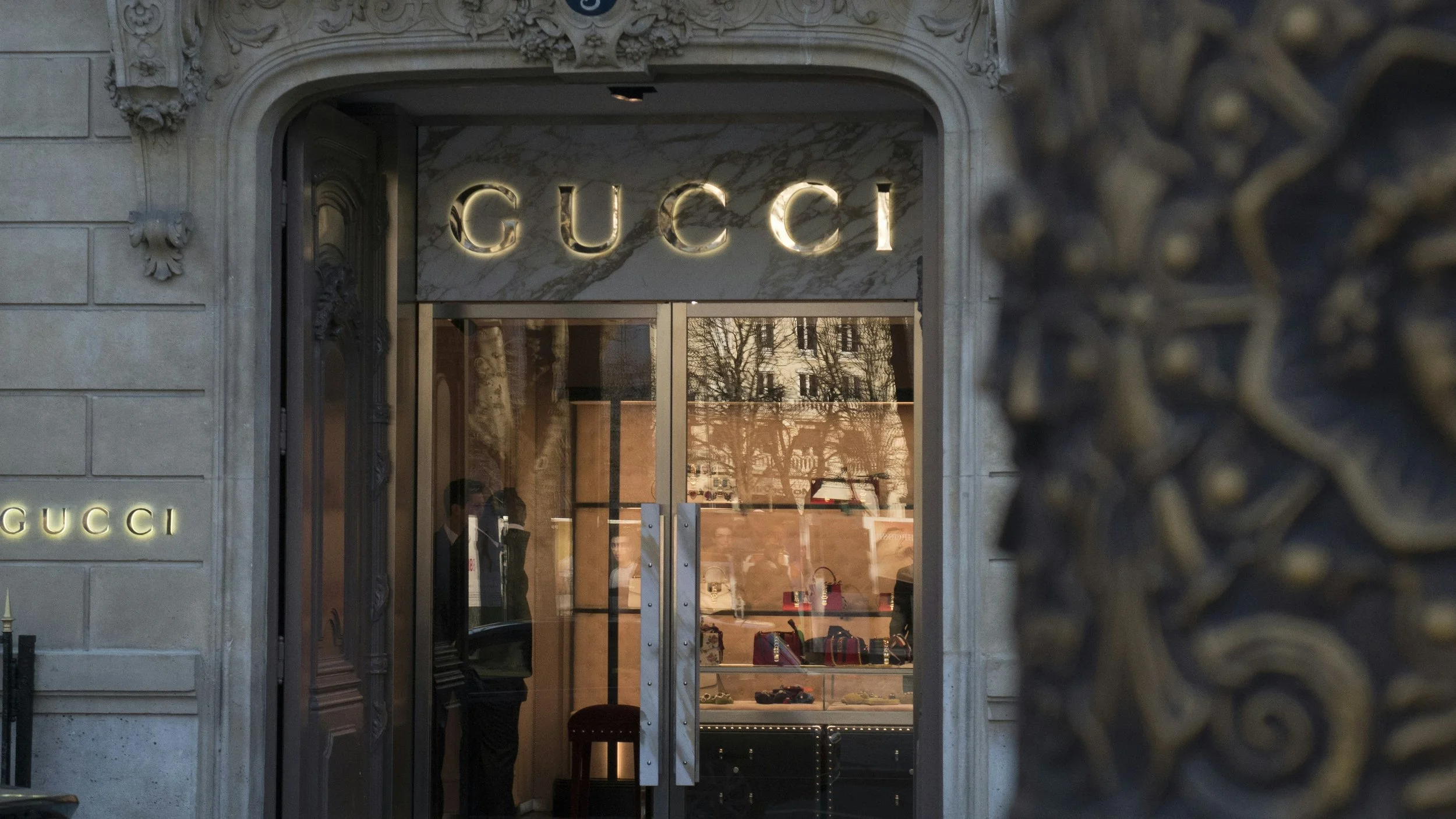
BRAND AUTOPSY · 04
Gucci: What maximalism leaves behind
Léa Mondoloni · May 2026 · 5 min read ↓
THE OBSERVATION
Alessandro Michele's Gucci was one of the most complete creative visions in contemporary luxury — a maximalist, historically promiscuous, queerly sensible world that transformed a brand that had been drifting into something that felt genuinely alive. From 2015 to 2022, Gucci was the brand that fashion people who normally preferred understatement could not stop discussing. The vision was totalizing: not just clothes, but a worldview. Not just a campaign, but a mythology.
When Michele left in November 2022, the house's explanation was the familiar corporate language of mutual divergence. The more honest story, read from the outside, was simpler: the sales had slowed, and the vision had not adapted. The brand had become its own most loyal customer — repeating and deepening its maximalist grammar precisely as the market began to tire of maximalism.
Sabato De Sarno arrived with a completely different proposal. Restraint. A specific shade of red called Ancora. A reset so total it felt less like a new direction than an erasure. The early reception was polite in the press and discreet in the sales figures.
THE DIAGNOSIS
Gucci's problem is one of the most structurally interesting in contemporary luxury because it is not really a creative problem. Michele did not merely bring a style to Gucci — he rebuilt the brand's entire reason for existing. Before him, Gucci was a powerful but directionally uncertain house. After him, it had something rare: a specific, consistent, genuinely loveable philosophy. The problem is that this philosophy was inseparable from his particular sensibility.
This is different from Burberry's identity governance failure. It is the problem of a brand rebuilt from scratch by a single vision — and now uncertain what it believes when that vision has departed. De Sarno's minimalist pivot addresses the commercial symptom without addressing the structural question: what does Gucci believe now? The answer cannot simply be the inverse of what it believed before. That is not a new direction. It is the shape left behind by the previous one.
The deeper issue is one that the industry does not discuss directly: Michele's Gucci was one of the rare instances in recent luxury history where a brand and its audience developed something approaching genuine affection. Desire is transactional. Affection is relational. The brand lost a relationship, not just a style. And relationships do not transfer to the next creative director by appointment.
THE IMPLICATION
What Gucci needs is not a new creative director with a strong vision. It is a board-level decision about what the house actually believes — the kind of decision that should precede the creative appointment rather than follow from it. Vision without conviction is decoration. The house that answers the identity question first, and builds the creative direction on top of the answer, will recover. The house that waits for a new genius to arrive and solve it will be having this same conversation again in five years.
The most honest question Gucci can ask itself is also the simplest: if Michele had never existed, what would Gucci be? The answer to that question — not the answer borrowed from him — is where the next identity begins.

“The hardest thing in luxury is not building a brilliant identity. It is knowing what you believe after the brilliance moves on.”
— Léa Mondoloni, Paris · 2026